
Complex primary knee replacement
Some first-time knee replacements need more detailed planning because of severe deformity, bone loss, ligament problems, previous injury or surgery, or anatomy that makes standard reconstruction less straightforward.
First-time knee replacement can sometimes require specialist reconstruction
- Severe deformity can affect alignment and implant positioning
- Previous injury or surgery may alter normal anatomy
- Bone loss or ligament insufficiency can increase complexity
- Detailed planning helps define the safest reconstruction strategy
What makes a primary knee replacement complex?
A primary knee replacement is the first replacement of the natural knee joint. In some patients, the pattern of arthritis or the anatomy makes the reconstruction more demanding than a standard total knee replacement.
Complexity may arise from severe bow-legged or knock-kneed deformity, loss of bone, ligament instability, stiffness, previous fractures, retained metalwork or earlier surgery around the knee. These factors can influence how the knee is balanced, aligned and reconstructed.
More complex cases often require additional preoperative planning and a wider range of implant or reconstructive options to be available on the day of surgery. The aim is to create a stable knee with appropriate alignment, useful movement and a reconstruction matched to the individual anatomical challenges.
The decision to proceed with surgery still depends on symptoms, function, quality of life and response to appropriate non-surgical treatment. Complexity changes how an operation may need to be planned, rather than automatically creating an indication for surgery.
It is different from revision surgery, where an existing knee replacement is being removed, exchanged or reconstructed.

Weight-bearing imaging helps define the reconstruction
Weight-bearing X-rays help show the pattern of arthritis, overall limb alignment and the degree of deformity. Together with examination and previous imaging, they help define how the knee may need to be balanced, aligned and stabilised.
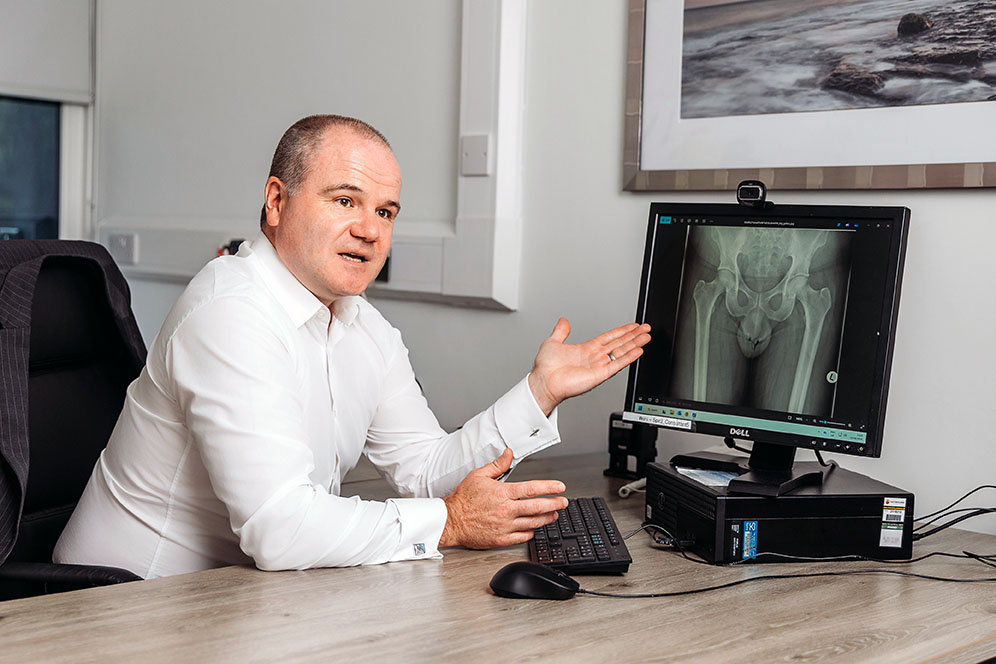
The implant strategy is chosen around the anatomy and ligament function
Weight-bearing imaging, previous surgery, bone quality, deformity and ligament stability are considered together when deciding whether standard components are suitable or whether additional fixation or constraint may be required.
Factors that can increase complexity
Several different factors can make a first knee replacement more technically demanding. These may occur individually or in combination.
Severe bowing or knock-knee
Marked deformity can alter normal alignment and soft-tissue balance and may require more extensive correction during reconstruction.
Instability or ligament deficiency
The knee may require additional stability when important ligaments are stretched, damaged or unable to provide normal support.
Bone loss or poor bone quality
Reduced bone stock can affect component support and may influence implant fixation or the need for additional reconstructive options.
Fracture or injury
A previous fracture can alter alignment, joint shape and bone quality and may create additional challenges during knee replacement.
Earlier operations
Previous procedures can alter scar tissue, anatomy, ligament function and surgical access around the knee.
Restricted movement
A very stiff or contracted knee can make exposure, balancing and restoration of useful movement more challenging.
Planning the reconstruction before surgery
Detailed preparation is particularly important in complex knee replacement. Weight-bearing X-rays help assess arthritis, alignment and deformity, while additional imaging may be requested where more information is needed about bone, previous injury or existing metalwork.
The surgeon also considers knee stability, range of movement, previous incisions, bone quality and whether standard implants are likely to provide enough stability. In some cases, implants offering additional fixation or constraint may need to be available.
The objective is to anticipate the likely challenges and have appropriate reconstructive options available while avoiding unnecessary complexity where a simpler solution remains suitable.
Preoperative planning includes considering how the reconstruction may need to change if bone quality, ligament stability or other findings are different from expected at surgery.
Assessment, planning and recovery
Specialist assessment
Symptoms, walking, knee movement, stability, previous treatment, health and existing imaging are reviewed to determine whether knee replacement is appropriate.
Detailed surgical planning
Alignment, deformity, bone quality and ligament function are assessed, with the likely implant and reconstruction options planned before surgery.
Complex primary knee replacement
The damaged natural joint surfaces are replaced and the knee is reconstructed using a strategy tailored to the anatomy, stability and operative findings.
Rehabilitation and follow-up
Early mobilisation and exercises support recovery. Rehabilitation and follow-up are adapted to the complexity of the reconstruction and individual progress.
What surgery aims to achieve
The main aim is to reduce pain from the damaged knee and create a stable joint that allows useful movement and improved everyday function.
- Reduced knee pain
- Improved walking and mobility
- Improved stability
- Correction of some deformity where safely achievable
- Greater independence with everyday activity
- Improved quality of life
The result that can realistically be achieved depends on the starting deformity, stiffness, ligament function, bone quality and overall health.
Important risks to understand
Complex primary knee replacement carries the recognised risks of knee replacement, while severe deformity, bone loss and other factors can affect an individual's risk profile.
- Infection
- Blood clots in the leg or lungs
- Bleeding or wound problems
- Persistent pain or stiffness
- Nerve or blood vessel injury
- Fracture
- Instability or problems with movement
- Wear, loosening or need for later revision surgery
Your individual risks and the potential limitations of reconstruction are discussed as part of shared decision-making and formal consent.
Rehabilitation is tailored to the reconstruction
Recovery after knee replacement can take several months or longer. Complex surgery may require a more individualised rehabilitation plan depending on stability, bone reconstruction, soft tissues and the findings at surgery.
Getting safely mobile
Pain control, blood-clot prevention, wound care and early mobilisation are central to recovery. Walking support is used as needed.
Restoring movement and strength
Exercises focus on knee movement, muscle control, strength and walking. Progress is adapted to the reconstruction and your individual recovery.
Building function over time
Improvement continues over the following months. Return to work, driving and exercise depends on progress and the advice of the surgical team.
Questions about complex primary knee replacement
What does "complex primary" knee replacement mean?
It means this is the first replacement of the natural knee, but factors such as severe deformity, ligament problems, bone loss, previous injury or previous surgery make the reconstruction more demanding than a routine primary knee replacement.
Does complex knee replacement always require a special implant?
No. Some knees can still be treated with conventional primary components. Others may require additional fixation or implant constraint. The choice depends on the anatomy, bone and ligament stability.
Can severe bow-legged or knock-kneed deformity be corrected?
Knee replacement can often improve alignment, but the amount of correction that is safe and appropriate depends on the individual deformity, soft tissues, bone and nerve structures.
Will recovery take longer?
It may. NHS guidance notes that recovery after knee replacement can take several months or longer. Complex reconstruction may add specific rehabilitation requirements, but recovery varies considerably between patients.
Can I seek a second opinion for complex knee replacement?
Yes. A second-opinion consultation can review the diagnosis, deformity, previous surgery or injury, existing imaging and the proposed reconstruction before you decide how to proceed.
Discuss a complex first knee replacement with Mr Dowen
A specialist consultation can review your symptoms, deformity, previous surgery or injuries and existing imaging, and explain how these factors may influence knee replacement planning.