
Revision knee replacement
Revision knee replacement is further surgery on a knee that has already been replaced. It may involve exchanging one or more components and, in more complex cases, reconstructing bone loss or restoring stability.
Revision surgery treats problems with an existing knee replacement
- Loosening, wear, instability, fracture and infection are possible causes
- Not every painful knee replacement requires further surgery
- Specialist imaging and infection investigations may be needed
- Revision knee replacement is generally more complex than primary surgery
What is revision knee replacement?
Revision knee replacement is an operation performed when an existing knee replacement develops a problem that is likely to benefit from further surgery.
Revision may involve replacing a single component or undertaking a much more extensive reconstruction. The scale of surgery depends on why the original replacement has failed, how securely the components remain fixed, the amount and quality of remaining bone and the condition of the ligaments and soft tissues.
Removing an existing implant can itself result in additional bone loss, and revision components may therefore need longer stems, augments or other methods of fixation to recreate a stable knee.
Pain after knee replacement is not by itself proof that the implant has failed or that revision surgery is needed. Ongoing pain and stiffness can occur after knee replacement for several reasons, and investigation is needed before deciding whether revision surgery is likely to improve the problem.
The aim is to identify a correctable cause of pain, instability, stiffness or loss of function and then plan treatment around that cause rather than revising a knee simply because symptoms persist.

Revision planning starts with identifying what has changed
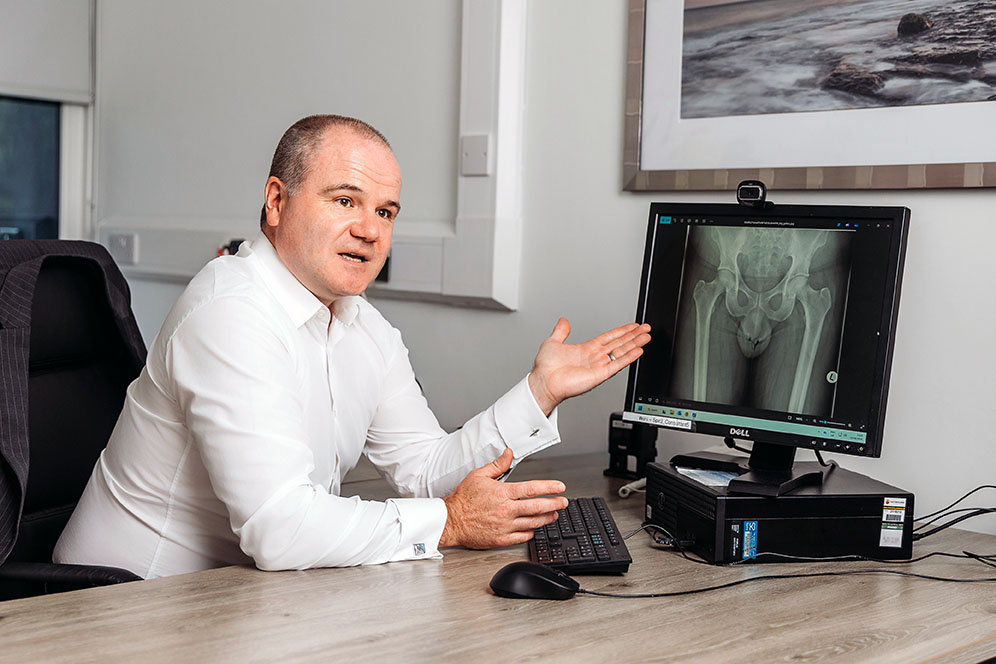
Weight-bearing X-rays, comparison with earlier imaging and implant information can help show loosening, bone loss, alignment problems or changes around the replacement. Blood tests, CT or joint aspiration may also be required depending on the suspected cause.
The revision is tailored to the cause of failure
Some operations involve one component, while others require more extensive reconstruction of bone or ligament stability. The surgical plan depends on fixation, bone stock, infection status, stability and the findings expected at surgery.
Why might a knee replacement need further surgery?
Revision surgery can be required for several different mechanical, structural or infection-related problems. The cause determines the reconstruction strategy.
Implant loosening
A component can lose secure fixation to the bone over time, causing pain and sometimes progressive bone loss around the replacement.
Wear of the replacement
Artificial components can wear with time. Wear can contribute to inflammation, bone loss and deterioration in joint function.
An unstable knee
Ligament problems, component position or other factors can leave the replacement feeling unstable when standing or walking.
Persistent severe stiffness
Some knees remain significantly stiff after replacement. Revision is considered only when the cause is understood and further surgery is expected to offer worthwhile benefit.
Fracture around the implant
A periprosthetic fracture can damage the bone supporting a knee replacement and may require fixation, revision components or both.
Joint replacement infection
Infection around a knee replacement is a serious complication and may require specialist investigation and one-stage or staged revision strategies depending on the circumstances.
Finding the cause before deciding on revision surgery
Assessment begins with the history of the original replacement, when symptoms started and how the knee has changed. Examination considers movement, stability, alignment, swelling and other possible sources of pain.
Weight-bearing X-rays are usually central to assessment. Previous X-rays can be especially helpful because they show whether component position, bone loss or fixation has changed over time. CT or other specialist imaging may be useful in selected cases.
Infection is an important potential cause of loosening or pain and must be considered where clinically appropriate. Investigation can include blood tests and, when indicated, aspiration of fluid from the joint for laboratory testing.
Previous operation notes and implant details are useful when available because they can help identify the components already in place and support planning if revision becomes necessary.
If assessment does not identify a problem that can reasonably be improved by revision surgery, continued non-surgical management or investigation of another source of symptoms may be more appropriate.
From investigation to reconstruction
Specialist assessment
Your symptoms, original surgery, subsequent history, examination and existing imaging are reviewed to understand why the knee replacement is causing problems.
Investigation and surgical planning
Further imaging, blood tests or joint aspiration may be arranged where appropriate. Bone loss, implant fixation, stability and reconstruction options are considered before surgery.
Revision knee reconstruction
The affected components are removed or exchanged and the knee is reconstructed according to the cause of failure, bone quality, ligament stability and findings at surgery.
Rehabilitation and follow-up
Mobilisation and rehabilitation are tailored to the reconstruction performed. Recovery may be more prolonged than after a primary knee replacement.
What revision surgery aims to achieve
The precise aim depends on the problem being treated. Revision surgery seeks to address a correctable cause of failure and reconstruct a stable, functional knee.
- Reduce pain arising from a failed or problematic replacement
- Restore implant fixation
- Improve stability
- Reconstruct bone loss or fracture where necessary
- Treat infection as part of a specialist revision strategy
- Improve walking and everyday function where achievable
The expected result depends on the reason for revision, bone and soft-tissue condition, stiffness, previous operations and general health.
Revision surgery is more demanding than primary replacement
Revision knee replacement carries the general risks of knee replacement, while previous surgery, bone loss, infection and complex reconstruction can increase technical difficulty.
- Infection
- Blood clots in the leg or lungs
- Bleeding or wound problems
- Persistent pain or stiffness
- Nerve or blood vessel injury
- Fracture or further bone loss
- Instability or problems with movement
- Wear, loosening or need for additional revision surgery
Individual risks vary substantially and are discussed in detail as part of assessment, shared decision-making and consent.
Recovery is tailored to the revision performed
Revision knee replacement is generally more complicated than a first replacement. Recovery can therefore take longer and depends on the complexity of reconstruction, bone quality, stability and reason for revision.
Early recovery
Pain control, wound care, blood-clot prevention and safe mobilisation are priorities. The length of hospital stay depends on the operation and individual progress.
Movement, strength and walking
Exercises and walking are progressed according to the reconstruction. Some patients may require additional restrictions or a more gradual rehabilitation programme.
Ongoing follow-up
Recovery continues over the following months. Complex revision cases may require closer or longer-term clinical and radiographic follow-up.
Questions about revision knee replacement
Does pain after knee replacement mean I need revision surgery?
No. Ongoing pain, stiffness or instability can have several causes. Assessment is used to identify whether there is a correctable problem with the replacement before further surgery is recommended.
Does the whole knee replacement need to be changed?
Not always. Some revision procedures involve only one component, while others require replacement of several components and reconstruction of bone or ligament stability.
Why is revision knee replacement more complex?
Existing implants must often be removed, which can result in additional bone loss. Previous surgery also changes the anatomy and soft tissues, and revision implants may need additional fixation or stability.
How is infection ruled out?
When infection is a possibility, assessment can include blood tests, imaging and aspiration of joint fluid. The investigation pathway is tailored to the individual clinical situation.
Is recovery longer than after the first knee replacement?
It can be. NHS revision knee information describes revision as more complex than primary surgery, and recovery depends on the extent of reconstruction and the reason the revision is required.
Discuss a painful or failing knee replacement with Mr Dowen
A specialist consultation can review your symptoms, previous knee surgery, implant information and imaging, investigate the likely cause of the problem and discuss whether revision surgery or another treatment pathway is appropriate.