
Hip pain
Hip pain can affect walking, sleep, work, exercise and everyday independence. Understanding where the pain is coming from is the first step towards choosing the right treatment.
Hip pain has many possible causes
- Pain may be felt in the groin, side of the hip, thigh or buttock
- Stiffness and reduced movement are common alongside pain
- Assessment is based on symptoms, examination and imaging when appropriate
- Treatment depends on the diagnosis and impact on everyday life
What is hip pain?

Hip pain is a symptom rather than a single diagnosis. It may arise from the hip joint itself, the muscles and tendons around it, or sometimes from another area such as the lower back.
The location and pattern of pain can provide useful clues. Problems within the hip joint are often felt in the groin or front of the thigh, while pain over the outside of the hip may be linked to the surrounding soft tissues. Some people also notice stiffness, weakness, limping or difficulty with activities such as putting on shoes and socks.
Osteoarthritis is a common cause of persistent hip pain in adults, particularly when pain and stiffness gradually increase over time. Other causes include tendon problems, bursitis, injuries and pain referred from the spine.
If hip pain is stopping you doing normal activities, affecting sleep, getting worse or repeatedly returning, assessment can help establish the cause and the appropriate next step.
How hip pain can present
Symptoms vary depending on the underlying cause. The pattern, location and effect on movement are all important when assessing hip pain.
Common symptoms
Hip problems may cause pain alone or a combination of pain, stiffness and reduced function.
- Pain in the groin, front of the thigh, buttock or outer hip
- Stiffness after rest or when first getting moving
- Reduced hip movement
- Difficulty walking or climbing stairs
- Pain when putting on shoes and socks
- Night pain or difficulty finding a comfortable sleeping position
- Limping or reduced walking distance
How symptoms affect daily life
The severity of a hip problem is not judged by a scan alone. How symptoms affect everyday function and quality of life is equally important.
- Difficulty getting in and out of a car
- Reduced ability to exercise or remain active
- Problems standing for longer periods
- Difficulty with work or household tasks
- Interrupted sleep
- Increasing reliance on pain relief
- Loss of confidence in movement
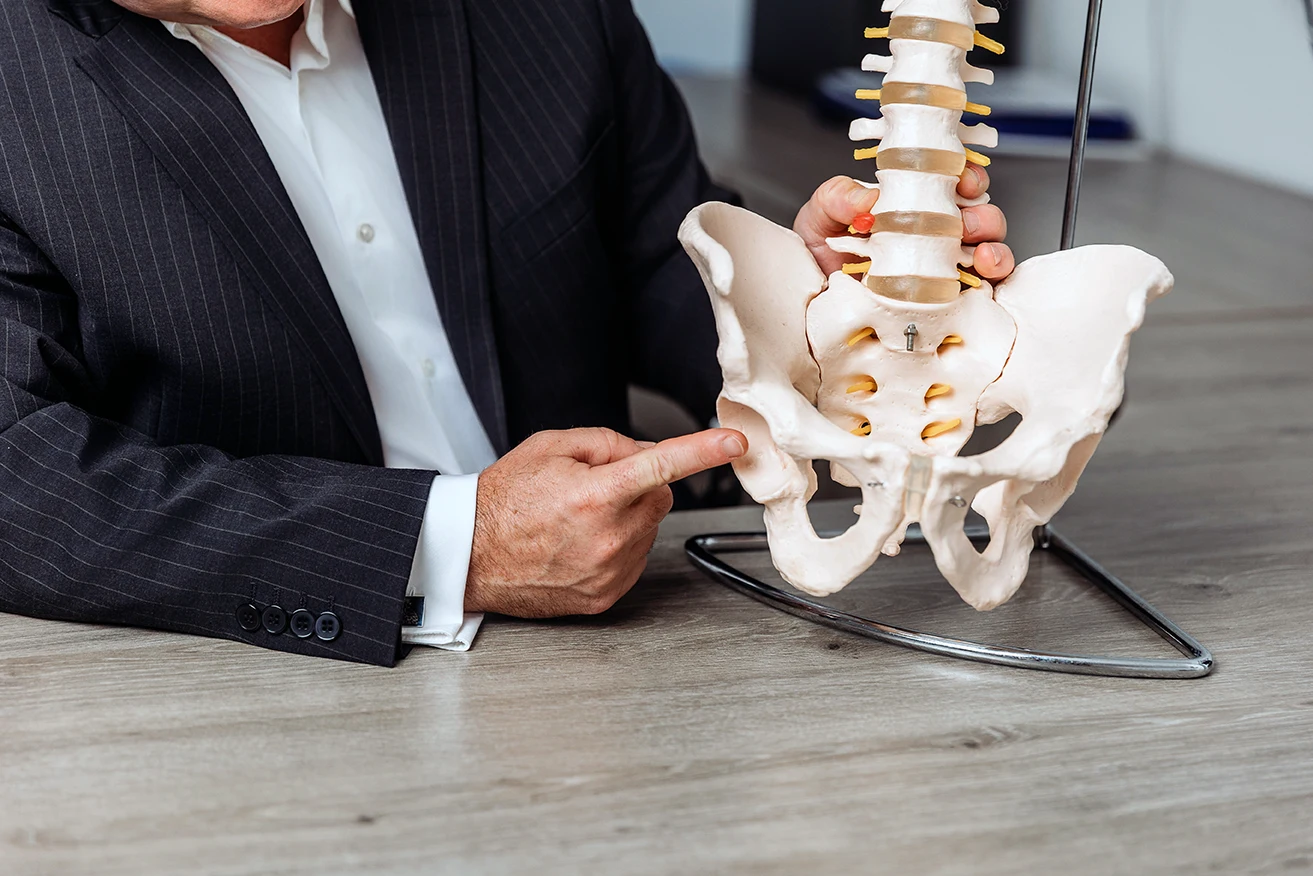
Where pain comes from matters
Pain arising from the hip joint is commonly felt in the groin or front of the thigh, while pain over the side of the hip may involve the surrounding tendons and soft tissues.

Symptoms, examination and imaging together
A diagnosis is not based on a scan alone. The pattern of symptoms, examination findings and appropriate imaging are considered together before treatment options are discussed.
Common causes of hip pain
Hip pain can develop gradually or begin after an injury. An accurate diagnosis helps distinguish problems arising from the joint itself from those affecting the surrounding tissues.
Hip osteoarthritis
A common cause of gradually increasing pain, stiffness and loss of movement, particularly in the groin and front of the thigh.
Greater trochanteric pain
Pain around the outside of the hip, often involving the tendons and other soft tissues around the greater trochanter.
Tendon problems
Irritation or overload of muscles and tendons around the hip can cause activity-related pain and tenderness.
Trauma or fracture
Falls and other injuries can damage bone or soft tissue. Severe pain with inability to bear weight after an injury requires urgent assessment.
Lower back or nerve pain
Pain felt around the hip may occasionally originate from the spine or nearby nerves rather than the hip joint itself.
Less common conditions
Inflammatory disease, infection and other less common conditions may also cause hip pain and are considered when symptoms or examination are atypical.
When should hip pain be assessed?
Consider seeking medical advice if hip pain is affecting normal activities or sleep, is getting worse, keeps returning, or has not improved with sensible self-care.
- Pain is limiting walking, work or daily activity
- You are experiencing persistent stiffness or loss of movement
- Symptoms are progressively worsening
- You have ongoing night pain
- You are concerned about a previous hip replacement
Urgent assessment is also appropriate for a hot, swollen joint accompanied by fever or feeling generally unwell.
How hip pain is assessed
Assessment starts with a detailed discussion about the location of the pain, when it began, what makes it better or worse and how it affects your day-to-day function.
- Review of symptoms and medical history
- Assessment of walking and movement
- Examination of the hip and surrounding structures
- Review of previous X-rays or scans where available
- New X-rays or other imaging when clinically appropriate
Imaging is not necessary for every cause of hip pain. The need for X-rays, MRI or other tests depends on the suspected diagnosis and whether the findings would change treatment.
Treatment depends on the cause of your hip pain
Many hip problems can initially be managed without surgery. Where symptoms are severe and the joint is significantly damaged, surgery may become appropriate after the alternatives have been considered.
Activity, exercise and rehabilitation
Appropriate exercise, muscle strengthening, activity modification and physiotherapy can help improve movement, strength and confidence.
Pain management and injections
Medication and, in selected circumstances, injections may be considered as part of a wider treatment plan rather than as a stand-alone solution.
Total hip replacement
Hip replacement may be considered for advanced joint damage when pain, stiffness and loss of function have a substantial effect on daily life despite appropriate non-surgical treatment.
Explore total hip replacementWhat can help while you are waiting for assessment?
Complete rest is rarely helpful for most non-traumatic hip problems. Gentle movement and sensible activity modification can help maintain mobility while symptoms settle or while you wait for further assessment.
Exercise should be adapted to what you can comfortably tolerate. Low-impact activity such as walking, cycling or swimming may be easier than higher-impact exercise for some people.
- Keep moving within comfortable limits
- Reduce activities that repeatedly flare symptoms
- Gradually rebuild strength and movement
- Discuss suitable pain relief with a pharmacist or clinician
- Use a walking aid if recommended and helpful
- Seek assessment if symptoms are worsening or persistent
Questions about hip pain
Where is hip joint pain usually felt?
Pain arising from the hip joint is often felt in the groin or front of the thigh, although symptoms can also spread towards the buttock or knee. The location alone does not confirm the diagnosis, so examination can be helpful when symptoms persist.
Does hip pain always mean arthritis?
No. Osteoarthritis is a common cause of persistent hip pain, but pain can also come from tendons, muscles, bursae, injury or referred pain from the lower back. Treatment depends on identifying the most likely source.
Will I need an X-ray or MRI scan?
Not always. The decision to arrange imaging depends on your symptoms, examination and the suspected cause. X-rays are commonly used when arthritis is suspected, while other imaging may be useful for selected problems or atypical symptoms.
When is hip replacement considered?
Hip replacement is usually considered when significant joint damage causes pain, stiffness and reduced function that have a major effect on quality of life and appropriate non-surgical treatments are no longer providing enough relief.
Can I see Mr Dowen for a second opinion?
Yes. A private consultation can be used to review an existing diagnosis, previous imaging or a proposed treatment plan, including complex problems and symptoms following previous hip surgery.
Get a clearer understanding of your hip pain
A consultation with Mr Dowen can help establish the likely cause of persistent hip symptoms, review existing scans and discuss the treatment options that may be appropriate.