
Revision hip replacement
Revision hip replacement is surgery to remove, exchange or reconstruct part or all of an existing hip replacement when the original joint replacement is no longer functioning as intended. It may be required because of problems such as implant loosening, wear, instability, fracture, infection or persistent symptoms linked to the replacement.
Revision surgery addresses problems with an existing hip replacement
- Only part of the replacement may need revision in some cases
- Loosening, wear, instability, fracture and infection are possible reasons
- Assessment may require specialist imaging and blood tests
- Revision surgery is generally more complex than primary hip replacement
What is revision hip replacement?
Revision hip replacement is a further operation on a hip that has already been replaced. The procedure may involve changing one component, several components or the entire artificial joint.
A hip replacement can function well for many years, but problems can occasionally develop. Components may loosen or wear, the hip may become unstable, bone can fracture around the implant, infection can occur, or symptoms may develop for another reason that needs investigation.
Revision surgery is usually more complex than a first hip replacement because existing components may need to be removed and the surrounding bone, anatomy and soft tissues may have changed. Bone loss can make reconstruction more demanding and specialist implants or bone reconstruction techniques may be required.
Importantly, pain after hip replacement does not automatically mean that the implant has failed or that another operation is needed. The first priority is to establish the cause of the symptoms as accurately as possible before deciding whether revision surgery is likely to help.
Painful joint replacements can have several causes. Revision surgery should be considered only when assessment identifies a problem that is likely to benefit from further surgery.

Revision planning begins with finding the cause of failure
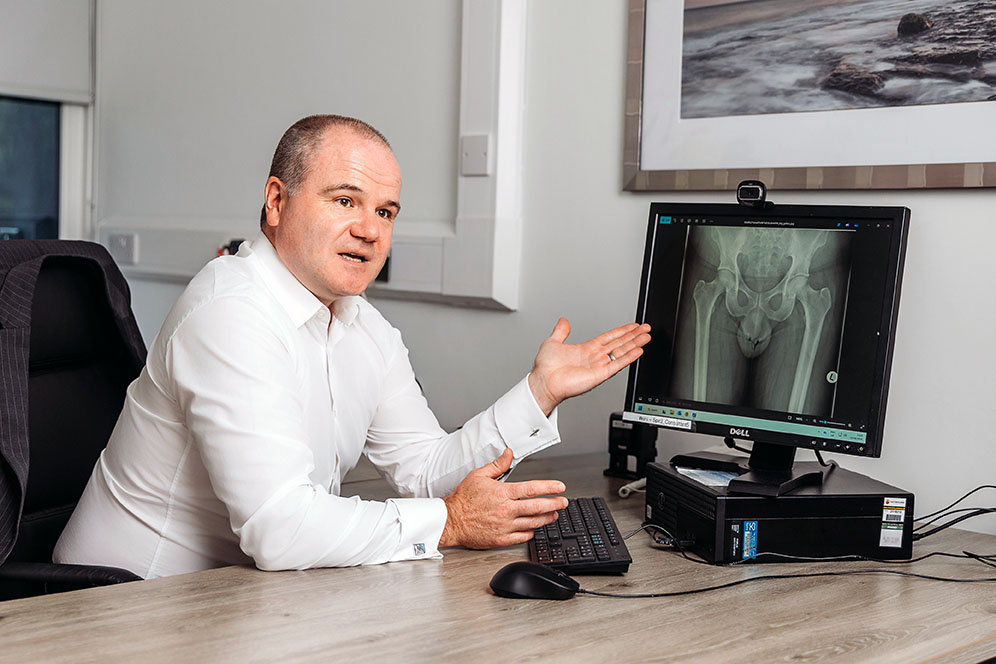
X-rays, previous operative records and implant information help show whether components are loose, worn, malpositioned or associated with bone loss. Additional imaging, blood tests or aspiration may be needed depending on the suspected problem.
Only the components that need revision are changed where appropriate
Some revision operations involve one component, while others require more extensive reconstruction. The strategy depends on implant fixation, bone stock, infection status, soft tissues and the findings expected at surgery.
Why might a hip replacement need further surgery?
The cause of symptoms determines the treatment strategy. Revision surgery may be considered for mechanical, structural or infection-related problems.
Implant loosening
A component may lose secure fixation to the bone over time, which can cause pain, movement of the implant and progressive bone loss.
Wear of the joint surfaces
Artificial bearing surfaces can wear over time. Wear debris may contribute to bone loss around components in some patients.
Recurrent dislocation
Repeated instability or dislocation can sometimes require revision when non-surgical measures are insufficient or the underlying cause needs reconstruction.
Fracture around the implant
A periprosthetic fracture can affect the bone around a hip replacement and may require fixation, revision of the implant or both.
Joint replacement infection
Infection around an artificial hip is a serious complication and can require specialist investigation and staged or single-stage revision strategies depending on the circumstances.
Persistent pain or implant problems
Component position, soft-tissue problems, fracture, referred pain and other causes may need to be considered before deciding whether revision is appropriate.
Finding the cause of symptoms before planning treatment
Investigation of a painful or failing hip replacement is often more detailed than assessment of an untreated arthritic hip. The clinical history is considered alongside examination, previous operative information and appropriate investigations.
X-rays are usually important. Depending on the suspected problem, further investigations may include CT or other specialist imaging and blood tests. If infection is a concern, additional investigations such as joint aspiration may sometimes be needed.
Previous operation notes, implant details and earlier X-rays can be extremely valuable because they help establish which components were used and how the hip has changed over time.
Infection can sometimes present without dramatic external signs. When it is part of the differential diagnosis, investigation is planned specifically before deciding on the revision strategy.
From diagnosis to reconstruction
Specialist assessment
The symptoms, original operation, subsequent history, examination and existing imaging are reviewed to identify likely causes of the problem.
Investigation and planning
Further imaging, blood tests or other investigations are arranged where necessary. Implant details, bone stock and reconstruction options are considered before surgery.
Revision reconstruction
The required component or components are removed or exchanged and the hip is reconstructed according to the cause of failure, bone quality and findings at surgery.
Recovery and follow-up
Mobilisation and rehabilitation are tailored to the reconstruction performed. Some revision operations require additional precautions or a slower progression than primary hip replacement.
What revision surgery aims to achieve
The aim depends on the problem being treated, but broadly revision surgery seeks to restore a stable and functional hip while addressing the reason the existing replacement is failing.
- Reduce pain arising from the failed or problematic replacement
- Restore implant stability
- Treat recurrent dislocation where revision is appropriate
- Reconstruct bone loss or fracture where needed
- Treat infection as part of a specialist surgical strategy
- Improve walking and everyday function where achievable
The expected outcome depends on why revision is required, the condition of the bone and soft tissues, the number of previous operations and general health.
Revision surgery is more complex than primary replacement
Revision hip surgery carries the recognised risks of hip replacement, but operating through previously treated tissues and managing bone loss or infection can make the operation more demanding.
- Infection
- Blood clots
- Dislocation or instability
- Fracture
- Nerve or blood vessel injury
- Bleeding or wound problems
- Leg-length difference
- Persistent pain or reduced function
- Further wear, loosening or need for additional revision surgery
Individual risks vary substantially between revision cases and are discussed in detail during assessment and consent.
Recovery may take longer than after a first hip replacement
Revision surgery is generally more complicated than primary replacement and recovery can be more prolonged. The rehabilitation plan depends on the reason for revision and the reconstruction performed.
Early recovery
Pain control, wound care, blood-clot prevention and safe mobilisation are priorities. The length of hospital stay varies with the procedure and recovery.
Weight-bearing and walking
Some patients can progress weight-bearing in a similar way to primary replacement, while others may need restrictions depending on bone reconstruction, fracture treatment or implant fixation.
Rehabilitation and follow-up
Movement, strength and endurance are rebuilt gradually. More complex reconstruction may need closer or longer-term follow-up than a routine primary replacement.
Questions about revision hip replacement
Does pain after hip replacement mean I need revision surgery?
No. Pain can have several causes and some are unrelated to the implant itself. Assessment aims to establish the cause before deciding whether further surgery is likely to help.
Does the whole hip replacement always need to be changed?
No. In some cases only one part of the replacement needs to be revised, while other situations require more extensive reconstruction. This depends on which components are affected and how securely they remain fixed.
Why is revision surgery more difficult than the first operation?
Existing implants may need to be removed, bone may have been lost and previous surgery changes normal anatomy and soft tissues. Revision therefore often requires more detailed planning and a wider range of reconstructive options.
How is infection investigated?
Where infection is suspected, assessment may include blood tests, imaging and sometimes aspiration of fluid from around the joint. The exact investigation pathway depends on the clinical circumstances.
Will recovery take longer than after my first hip replacement?
It can. NHS revision hip information notes that revision surgery is more complicated than primary surgery and recovery may take longer. The timescale depends on the problem being treated and the reconstruction performed.
Discuss a painful or failing hip replacement with Mr Dowen
A specialist consultation can review your symptoms, previous hip surgery, implant information and imaging, investigate the likely cause of the problem and discuss whether revision surgery or another treatment pathway is appropriate.