
Hip arthritis
Hip osteoarthritis can cause gradually increasing pain, stiffness and loss of movement. Treatment is guided by your symptoms, function, examination and how much the condition is affecting everyday life.
Hip arthritis often develops gradually
- Pain is commonly felt in the groin or front of the thigh
- Stiffness may be worse after rest or first thing in the morning
- Walking, stairs and putting on shoes can become more difficult
- Treatment ranges from exercise and pain management to hip replacement
What is hip arthritis?
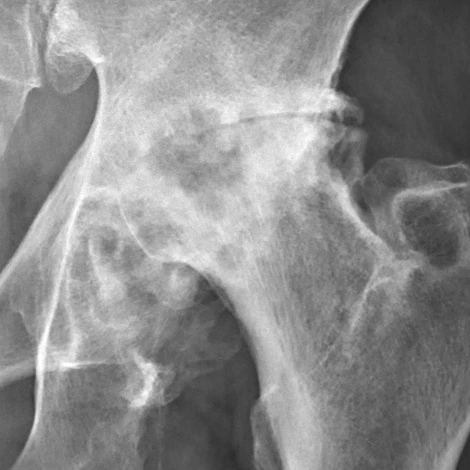
Hip osteoarthritis is a long-term condition affecting the joint. It can cause pain, stiffness and reduced movement, but the severity of symptoms varies considerably from person to person.
The hip is a ball-and-socket joint. In osteoarthritis, changes within the joint can affect the smooth surfaces, underlying bone and surrounding tissues. These changes may make movement less comfortable and reduce the range of motion.
Symptoms often develop gradually. Some people have mild changes for years, while others experience increasing pain and functional limitation that eventually affects walking, sleep, work, exercise and independence.
Treatment decisions should take account of your pain, stiffness, function, quality of life and response to non-surgical treatment rather than imaging alone.
Common symptoms of hip arthritis
Hip arthritis typically causes a combination of pain, stiffness and reduced function, although the exact pattern differs between patients.
Symptoms you may notice
- Groin pain or aching at the front of the thigh
- Stiffness after sitting or resting
- Reduced hip movement
- Pain when walking or standing for longer periods
- Difficulty putting on shoes and socks
- Limping or shortening of walking distance
- Night pain in more advanced cases
Impact on everyday life
- Difficulty getting in and out of a car
- Problems with stairs
- Reduced ability to exercise
- Difficulty with work or household tasks
- Interrupted sleep
- Increasing use of pain relief
- Loss of confidence in movement
Factors associated with hip osteoarthritis
There is rarely one single cause. Age, previous injury, joint shape, genetics and overall joint loading can all contribute.
Age-related joint change
The likelihood of osteoarthritis increases with age, although it is not an inevitable part of ageing.
Trauma or previous surgery
Previous fractures, significant injury or earlier procedures may increase the risk of later joint degeneration.
Hip anatomy
Differences in the shape or development of the hip can alter how forces pass through the joint over time.
Genetic influence
Some people appear to have a greater inherited susceptibility to osteoarthritis.
Joint loading
Higher body weight can increase the mechanical load placed through a painful hip joint.
Secondary arthritis
Inflammatory disease and other joint conditions can sometimes lead to secondary degenerative changes.
When should hip arthritis be assessed?
Consider assessment if pain and stiffness are persistent, worsening or beginning to interfere with your usual activities.
- Walking distance is becoming limited
- Sleep is regularly disturbed by hip pain
- Stiffness is affecting dressing or daily tasks
- You are increasingly dependent on pain relief
- Previous treatment is no longer controlling symptoms
How hip arthritis is diagnosed
Diagnosis is usually based on the history of your symptoms, clinical examination and, when useful, X-rays.
- Discussion of pain, stiffness and daily function
- Assessment of walking and hip movement
- Examination of the hip and nearby structures
- Review of previous imaging where available
- X-rays when they are likely to help confirm the diagnosis or guide treatment
Routine repeat imaging is not normally needed simply to monitor osteoarthritis when it would not change management.
Treatment is tailored to your symptoms and goals
Most people begin with non-surgical treatment. Hip replacement may be considered when symptoms have a substantial effect on quality of life and appropriate non-surgical options are no longer effective or suitable.
Exercise and rehabilitation
Therapeutic exercise, muscle strengthening and maintaining general activity can help improve function and confidence.
Pain management and support
Pain relief, activity modification, walking aids and weight management where appropriate may all form part of treatment.
Total hip replacement
Hip replacement can be considered when pain, stiffness and loss of function have a substantial impact despite appropriate non-surgical treatment.
Explore total hip replacementStaying active with hip arthritis
Regular activity and exercise are central parts of osteoarthritis management. The aim is to keep the joint moving, maintain strength and reduce unnecessary loss of function.
Exercise should be matched to what you can tolerate and progressed gradually rather than stopped completely because of discomfort.
- Use low-impact exercise such as walking, cycling or swimming if comfortable
- Work on hip and leg strength
- Break up long periods of inactivity
- Modify activities that repeatedly provoke significant pain
- Consider a walking aid if it improves confidence and mobility
- Discuss medication with a pharmacist or clinician if needed
Questions about hip arthritis
Does hip arthritis always get worse?
No. Osteoarthritis is a long-term condition, but symptoms do not necessarily worsen steadily. Some people have periods when symptoms are more noticeable and others when they are easier to manage.
Do I need an MRI scan?
Usually not when the clinical picture is typical. X-rays may be sufficient when imaging is required, and additional scans are generally reserved for situations where the diagnosis is uncertain or the result would alter treatment.
Should I avoid exercise if my hip hurts?
Not usually. Therapeutic exercise is a core part of osteoarthritis management. The type and intensity should be adapted to your symptoms and progressed sensibly.
When should hip replacement be considered?
Joint replacement may be considered when pain, stiffness or reduced function are having a substantial impact on quality of life and non-surgical management is ineffective or unsuitable.
Can I see Mr Dowen for a second opinion?
Yes. A consultation can review your symptoms, existing X-rays or scans and previous treatment, and discuss whether further non-surgical management or surgery should be considered.
Discuss persistent hip arthritis symptoms with Mr Dowen
A private consultation can help review the extent of your symptoms, assess existing imaging and discuss whether continued non-surgical treatment or hip replacement may be appropriate.