
Knee arthritis
Knee osteoarthritis can cause pain, stiffness, swelling and loss of function. Treatment is guided by how much the condition is affecting everyday life, rather than by an X-ray alone.
Knee arthritis affects people differently
- Pain and stiffness are the most common symptoms
- Swelling and reduced movement may develop
- Exercise and rehabilitation are important parts of treatment
- Knee replacement may be considered when symptoms substantially affect quality of life
What is knee arthritis?
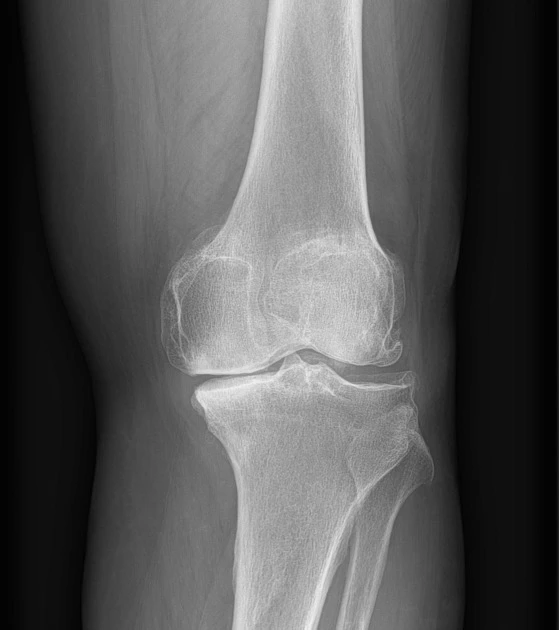
Knee osteoarthritis is a long-term condition involving changes throughout the joint. It can cause pain, stiffness and reduced mobility, but symptoms do not always match the severity of changes seen on an X-ray.
The knee is formed by the thigh bone, shin bone and kneecap, with cartilage and other tissues helping the joint move smoothly and distribute load. Osteoarthritis can affect these joint surfaces as well as the surrounding bone, ligaments, muscles and other tissues.
Symptoms may develop slowly and can vary from day to day. Some people experience intermittent discomfort, while others develop more persistent pain, stiffness and difficulty with walking, stairs, work, exercise or sleep.
The impact of pain, stiffness and reduced function on your quality of life is central to treatment decisions. Imaging can support assessment when needed, but it should not be the only factor.
Common symptoms of knee arthritis
Symptoms can range from occasional discomfort to persistent pain and reduced mobility. They may fluctuate rather than worsen at a steady rate.
Symptoms you may notice
- Pain during or after walking
- Stiffness after sitting or resting
- Swelling around the knee
- Reduced ability to fully bend or straighten the joint
- Grinding, clicking or creaking sensations
- Pain when using stairs
- Increasing discomfort with weight-bearing activity
How it can affect daily life
- Reduced walking distance
- Difficulty getting up from a chair
- Problems kneeling or squatting
- Difficulty with work or household tasks
- Reduced exercise and recreational activity
- Interrupted sleep
- Loss of confidence or independence
Factors associated with knee osteoarthritis
Osteoarthritis usually develops through a combination of factors rather than one single cause.
Age-related change
Osteoarthritis becomes more common with age, although it is not an inevitable part of getting older.
Earlier knee trauma
Significant ligament, meniscal or fracture injuries can increase the likelihood of later osteoarthritis.
Earlier procedures
Some previous knee injuries and operations are associated with later degenerative joint change.
Joint loading
Higher body weight can increase mechanical load through the knee and may contribute to symptoms.
Joint shape and alignment
Differences in alignment can affect how load passes through different parts of the knee.
Secondary arthritis
Inflammatory joint disease and other conditions can sometimes result in secondary degenerative changes.
When should knee arthritis be assessed?
Assessment may be helpful when pain and stiffness are persistent, worsening or beginning to substantially affect normal activities.
- Your walking distance is becoming limited
- Stairs are becoming increasingly difficult
- Pain regularly disturbs sleep
- Swelling or stiffness is affecting movement
- Non-surgical treatment is no longer giving enough relief
How knee arthritis is assessed
Osteoarthritis can often be diagnosed from the pattern of symptoms and examination. Imaging may be useful when the diagnosis is uncertain or when planning further treatment.
- Discussion of pain, stiffness and daily function
- Assessment of walking and knee alignment
- Examination of movement, stability and tenderness
- Review of previous X-rays or scans
- New X-rays when they are likely to influence treatment planning
Routine imaging is not usually needed simply to monitor osteoarthritis if the result would not change management.
Treatment is tailored to symptoms, function and priorities
Core treatment usually begins with therapeutic exercise and support to remain active. Other non-surgical measures may be added where appropriate. Joint replacement can be considered when symptoms substantially affect quality of life and non-surgical management is ineffective or unsuitable.
Exercise and rehabilitation
Strengthening, movement exercises and maintaining general activity are central parts of osteoarthritis management and can improve function.
Pain management and support
Medication, activity modification, weight management where appropriate and selected injections may form part of a broader treatment plan.
Knee replacement
Partial or total knee replacement may be considered for selected patients with advanced arthritis and significant ongoing symptoms.
Explore total knee replacementExercise remains important with knee arthritis
Pain can make exercise feel counterintuitive, but regular therapeutic exercise is one of the core treatments for osteoarthritis. Building strength and maintaining general fitness can improve function and help people remain active.
Exercise should be matched to your starting point and progressed gradually. Some initial discomfort does not necessarily mean that the joint is being damaged.
- Keep moving regularly within comfortable limits
- Strengthen the muscles around the knee and hip
- Use low-impact exercise if higher-impact activity is uncomfortable
- Build activity gradually rather than stopping completely
- Consider weight management support where relevant
- Discuss appropriate pain relief with a pharmacist or clinician
Questions about knee arthritis
Does knee arthritis always get worse?
No. Osteoarthritis is a long-term condition, but symptoms can fluctuate. Some people remain stable for long periods, and changes on an X-ray do not always predict the amount of pain someone experiences.
Should I avoid exercise because my knee is worn?
No. Regular therapeutic exercise is a core treatment for osteoarthritis. Appropriate strengthening and general activity can improve symptoms and function.
Do I need an MRI scan?
Usually not when the diagnosis is typical osteoarthritis. X-rays may be useful when imaging is needed, while MRI is generally reserved for situations where another diagnosis is suspected or the result would alter treatment.
When should knee replacement be considered?
Referral for joint replacement can be considered when pain, stiffness, reduced function or progressive deformity are substantially affecting quality of life and appropriate non-surgical management is ineffective or unsuitable.
Does a bad X-ray mean I need surgery?
No. Treatment decisions should reflect your symptoms, function and priorities as well as examination and imaging. Significant X-ray changes alone do not automatically mean that joint replacement is required.
Discuss persistent knee arthritis symptoms with Mr Dowen
A private consultation can review how knee arthritis is affecting you, assess existing imaging and discuss whether continued non-surgical treatment or knee replacement may be appropriate.