
Knee pain
Knee pain can develop gradually or follow an injury. It may affect walking, stairs, sport, work, sleep and confidence in the joint. Finding the cause helps guide the most appropriate treatment. A careful assessment can help determine whether symptoms are best managed with rehabilitation, other non-surgical treatment or, in selected cases, surgery.
Knee pain can come from several different structures
- Pain may be related to the joint, cartilage, ligaments, tendons or kneecap
- Swelling, stiffness, locking or giving way can help narrow the diagnosis
- Not every knee problem needs a scan
- Treatment depends on the cause, severity and effect on daily life
What is knee pain?
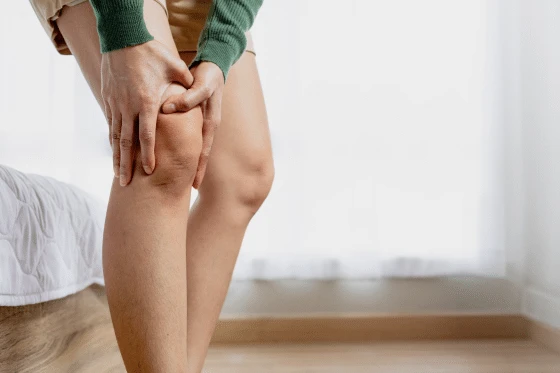
Knee pain is a symptom rather than a single diagnosis. The knee contains several structures that can become painful, including the joint surfaces, menisci, ligaments, tendons and tissues around the kneecap.
Some knee problems develop gradually, particularly osteoarthritis and overuse-related conditions. Others begin after a twist, fall, sporting injury or sudden change in activity.
The location of the pain, how it started, whether the knee swells and whether it catches, locks or gives way can all provide useful clues. The effect on walking, stairs, work, exercise and sleep is also important when deciding what treatment may be appropriate.
Many causes improve with activity modification, rehabilitation and time. Surgery is considered when there is a clear diagnosis and a reasonable expectation that an operation will improve symptoms or function.
How knee problems can present
Different conditions produce different patterns of pain and mechanical symptoms. The combination of symptoms often helps guide assessment.
Common symptoms
- Pain around the front, inside, outside or back of the knee
- Swelling after activity or injury
- Stiffness or reduced movement
- Pain when climbing stairs or rising from a chair
- Clicking, catching or locking
- A feeling that the knee may give way
- Pain during sport or exercise
Effect on everyday life
- Reduced walking distance
- Difficulty kneeling or squatting
- Problems with work or household tasks
- Reduced confidence on uneven ground
- Difficulty returning to sport
- Interrupted sleep
- Increasing reliance on pain relief
The pattern of pain helps guide the diagnosis
Pain at the front, inside, outside or back of the knee can point towards different structures. Swelling, locking, giving way and the way symptoms began are also important clues.
Not every painful knee needs an MRI
Examination and the history of the problem help determine whether X-rays, MRI or other investigations are likely to add useful information and change treatment.
Common causes of knee pain
Knee pain can arise from wear within the joint, an acute injury or irritation of the soft tissues around it.
Knee osteoarthritis
A common cause of gradually increasing pain, stiffness, swelling and reduced walking tolerance, particularly in middle and later life.
Meniscal tears and degeneration
Meniscal tears can follow injury or develop alongside age-related changes and may cause pain, swelling, catching or restriction of movement.
Ligament injury
Twisting injuries can damage stabilising ligaments such as the ACL, MCL or PCL and may lead to swelling or a sense of instability.
Patellofemoral pain
Pain arising around or behind the kneecap may be particularly noticeable with stairs, squatting, running or prolonged sitting.
Tendon and soft-tissue pain
Tendons and other tissues around the knee can become irritated by changes in activity, overload or repetitive strain.
Pain after knee replacement
Persistent or new pain following joint replacement requires careful assessment to identify whether the symptoms relate to the implant or another cause.
When should knee pain be assessed?
Consider assessment when knee pain is affecting normal activity or sleep, is getting worse or keeps returning, or is not improving with sensible self-care.
- Pain is limiting walking, work or exercise
- The knee repeatedly swells
- You have persistent stiffness or loss of movement
- The knee feels unstable or repeatedly gives way
- You have ongoing symptoms after a previous knee operation
Urgent advice is also appropriate if the knee is hot or red and you have a high temperature or feel unwell.
How knee pain is assessed
Assessment begins with how the symptoms started, their location, whether the knee swells or feels unstable and how much the problem affects everyday activities.
- Review of symptoms and previous injuries
- Assessment of walking, movement and alignment
- Examination of the knee and surrounding structures
- Review of previous scans or X-rays where available
- Imaging when the result is likely to clarify the diagnosis or alter treatment
Not every knee problem requires an MRI scan. X-rays may be more useful when osteoarthritis is suspected, while MRI is generally reserved for selected soft-tissue or structural problems.
Treatment is based on the diagnosis and your goals
The right treatment depends on what is causing the pain, the severity of the problem and the effect on your activity and quality of life.
Exercise and rehabilitation
Strengthening, movement work and gradual return to activity are important for many knee problems and are central to osteoarthritis care.
Pain management and injections
Medication, activity modification and selected injections may be considered where appropriate as part of a broader treatment plan.
Knee surgery
Surgery may be considered for selected structural injuries or advanced arthritis where symptoms remain significant despite appropriate non-surgical care.
Explore knee treatmentsWhat can help while knee pain settles?
For many non-traumatic knee problems, keeping gently active is usually preferable to complete rest. Activity can be reduced or adapted for a short period and then gradually rebuilt.
If an activity repeatedly causes a significant flare, it may be sensible to modify it temporarily while maintaining movement and strength in other ways.
- Keep moving within comfortable limits
- Reduce high-impact activity temporarily if it aggravates symptoms
- Maintain thigh and hip strength
- Use ice after an acute flare or injury if helpful
- Discuss suitable pain relief with a pharmacist or clinician
- Seek assessment if pain persists, worsens or mechanical symptoms develop
Questions about knee pain
Does knee pain always mean arthritis?
No. Osteoarthritis is common, but knee pain can also arise from meniscal problems, ligament injuries, kneecap-related pain, tendons and other soft tissues.
Do I need an MRI scan?
Not necessarily. The need for MRI depends on the suspected diagnosis and whether the result would alter treatment. X-rays may be more useful when osteoarthritis is suspected.
Is clicking in the knee always a problem?
Painless clicking is common and does not necessarily indicate damage. Painful clicking, locking, swelling or giving way should be assessed if persistent.
When is knee replacement considered?
Joint replacement may be considered for advanced knee osteoarthritis when pain, stiffness or reduced function substantially affect quality of life and appropriate non-surgical management is ineffective or unsuitable.
Can I see Mr Dowen for a second opinion?
Yes. A consultation can review an existing diagnosis, previous imaging, proposed surgery or persistent symptoms following earlier treatment.
Get a clearer understanding of persistent knee pain
A consultation with Mr Dowen can help establish the likely cause of your symptoms, review existing imaging and discuss the most appropriate next steps.